
How to Choose a Camping Tent? Imporatant Consideration
When choosing a camping tent, there are several important considerations to keep in mind. It’s important to consider your camping style and habits. Do you camp often or occasionally? Are you car camping or backpacking? Are you taller than average and need extra headroom? Do you want a separate room for gear or privacy?
Also, it’s always a good idea to read reviews and check the product specifications before making a purchase. The following are the critical factors to consider when choosing your tent.
Camping tent Space and Comfort
Space and comfort are important factors to consider because they affect the overall quality of your camping experience. Ensure the tent is large enough to accommodate the number of people sleeping comfortably. Take into account the size of your sleeping pads and bags and any gear you’ll be storing inside the tent.
Additionally, if you plan on using air mattresses inside, choose your tent accordingly because all tents don’t have the luxury of putting air mattresses inside. Also, if you are taller than average or like to move around while you sleep, you’ll want a tent with more headroom.
When camping in warm weather, it’s important to have a tent with a good ventilation system to keep the interior cool and comfortable.
Also, if you’re camping with children or pets, you may consider a tent with a separate room for them or gear. So, by considering the factors of space and comfort, you can ensure that you will have a good night’s sleep and enjoy your camping experience to the fullest.
Vestibule Space
A vestibule is an area in a tent located outside the main living area but is still covered by the tent’s rainfly. The vestibule is typically located at the front or rear of the tent and extends the tent’s living space.
The vestibule space is typically covered by the tent’s rainfly, which means that gear stored there will be protected from rain and snow. It also serves as a transition area. The vestibule space can serve as a transition area between the outside and the inside of the tent, which can be useful for shedding dirty or wet gear before entering the main living area.
The vestibule space of a tent provides many benefits; it can increase storage and protect gear and provide privacy, ventilation, and a transition area. It’s a feature that is highly recommended to consider when choosing a tent.
Weather Resistance
Weather resistance is a critical consideration when choosing a camping tent. The tent is the primary shelter that protects you from the elements, so it’s important to ensure it can keep you dry and comfortable in various weather conditions.
Look for a tent with a sturdy rainfly and waterproof coating to protect against inclement weather and good ventilation to prevent condensation and keep the tent comfortable. When looking for a weather-resistant tent, look for features such as a fully-covered rainfly and waterproof coating.
It’s also important to consider the tent’s seasonality rating. Tents are typically rated as 3-season, 4-season, or backpacking tents. A 3-season tent is designed for spring, summer, and fall, with less protection for colder weather. A 4-season tent is designed for all seasons, with more protection for colder and harsher weather conditions. And a backpacking tent is lightweight, compact, and designed for backpacking or trekking.
In summary, weather resistance is crucial when choosing a camping tent as it ensures that you will have a safe, dry and comfortable shelter to protect you from the elements during your camping trip.
Some of the most common types include:
Dome Tent
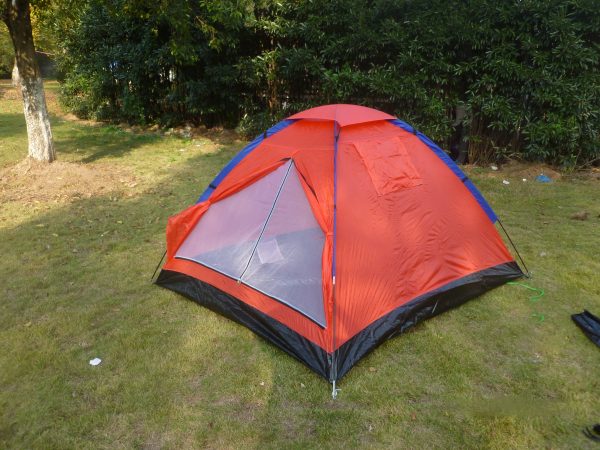
Dome tents are popular for camping because of their stability and ease of setup. They are designed with two or more poles that cross in the center and form a dome. Dome tents can have one or more rooms and usually have a rainfly.
Cabin Tent
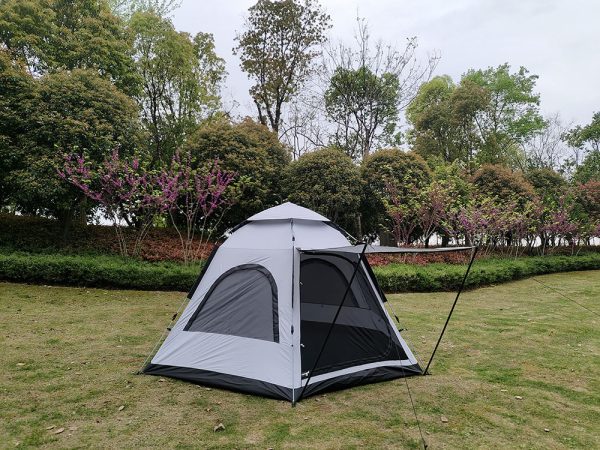
Cabin tents are designed to provide maximum space and headroom. They typically have vertical walls and peaked roofs, making them feel more like a traditional houses. Cabin tents can sleep many people and are good for camping with families.
Backpacking Tent
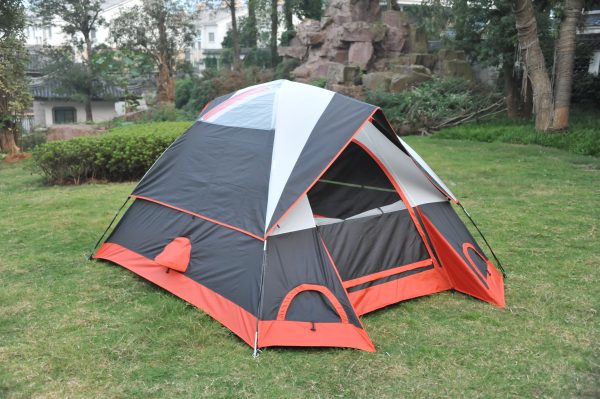
Backpacking tents are designed for people looking for a lightweight, compact tent that can be easily carried in a backpack. They usually have a minimalist design, with only one or two poles, and are designed to be set up quickly and easily.
Pop-Up Tent
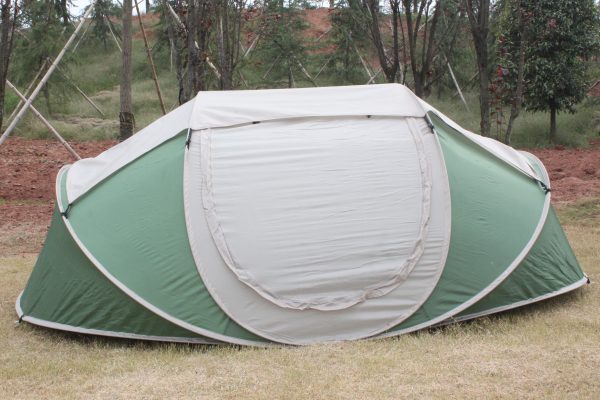
Pop-up tents are designed to be very quick and easy to set up, with a pre-assembled frame that can be popped open in seconds. They are lightweight and easy to transport but may not be as durable or weather-resistant as other types of tents.
Inflatable Tent
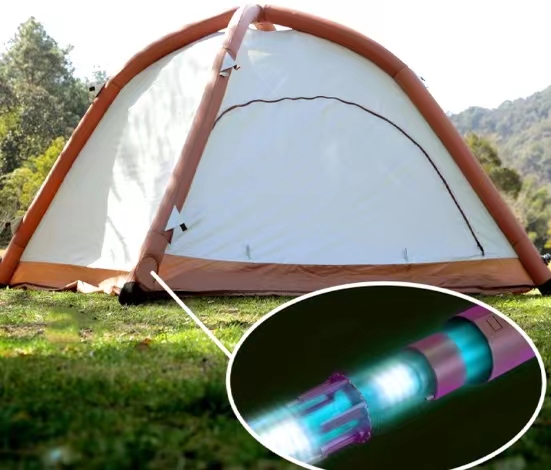
Inflatable tents are a relatively new type of tent that uses an air-beam structure instead of poles. They are easy to set up, as you only need to inflate the air beams, but they can be more expensive than traditional tents and may be more difficult to repair if they are punctured.
Six-Person vs. Four-Person
When choosing a tent, the size of the tent is an important consideration. Generally, a six-person tent will be larger than a four-person one, providing more space for occupants and gear. However, there are a few other factors to consider when comparing a six-person tent to a four-person tent.
Sleeping capacity: A six-person tent will have more capacity than a four-person tent. It means that it will be able to accommodate more people, which can be useful for camping with a larger group or family.
Floor space: A six-person tent typically has more floor space than a four-person tent. It means that occupants will have more room to move around and store gear inside the tent.
Headroom: A six-person tent usually has more headroom than a four-person tent, providing more space for occupants to sit up and move around.
Weight and Pack size: A six-person tent will usually be heavier and bulkier than a four-person tent, making it less suitable for backpacking or long-distance hiking.
Walk-In Campsites
Walk-In Campsites are areas that provide a peaceful and secure camping environment in the wilderness. You can think of it as a safe, calm, and beautiful camping place within walking distance from your car parking spot. This way, you can enjoy a little trekking into the wilderness and camp at a beautiful and convenient camping spot.
Here it would be best if you choose a portable and lightweight tent as you may need to carry it for a few hundred feet. It should also pack to a compact size and offer a fast and easy setup.
Final Thoughts: How to Choose a Camping Tent
So, I have discussed many things here about how to choose a camping tent, and I hope that simplifies things for you and your purchasing decisions when you are just getting into backpacking and camping.